

Introduction
Cooling our homes and offices is more important than ever. In hotter climates and longer warm seasons, the burden on conventional air-conditioning units is rising. What if you could ease that burden, slash your electricity bills, and reduce your carbon footprint?
That’s where solar panels for air conditioners come in. Whether you’re pairing photovoltaic (PV) panels with a standard AC or investing in a solar-ready air-conditioning system, this guide will help you understand how it works, what to expect, and how to choose the best setup for your home or business.
Key Takeaways
Solar panels can significantly offset the electricity consumption of air conditioners.
The overall design—panel size, inverter type, and whether it’s grid-tied or off-grid—is more important than just “adding panels.”
Solar AC systems reduce costs and emissions, but the payback period varies by location and usage.
Different technologies exist: DC solar ACs, inverter-driven units, hybrid systems, etc.
Your local climate, daylight use pattern, and roof space determine the system’s success.
The main advantages are lower electricity bills and greener operation; the downsides include higher upfront cost and system complexity.
What Are Solar Panels for Air Conditioners?
How It Works
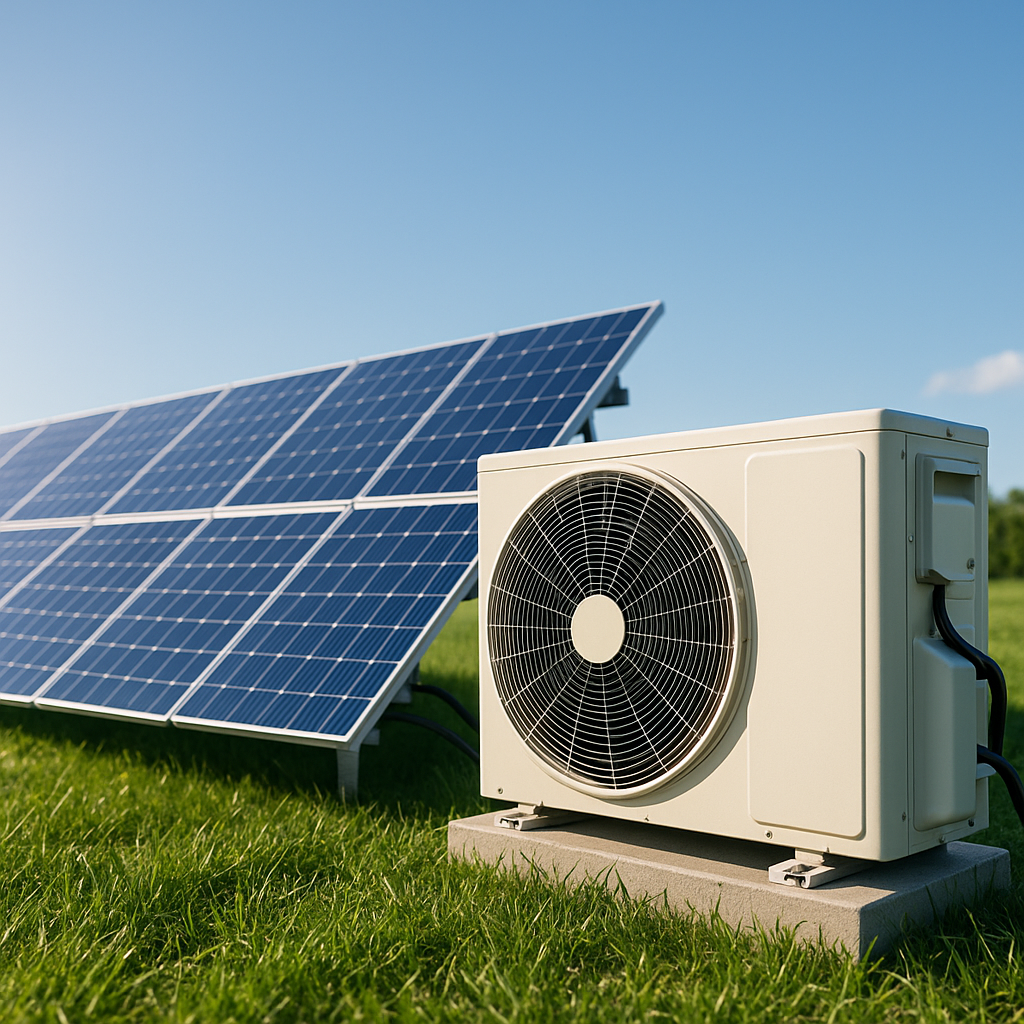
A solar-powered air conditioner uses electricity generated from photovoltaic (PV) panels to power the AC unit. There are three main types:
Grid-tied systems: Panels feed electricity into your home grid; your AC draws from that pool during the day.
Off-grid or battery systems: Panels charge batteries, which power the AC unit day and night.
Direct-DC solar AC units: The AC runs directly on DC electricity from the panels, reducing conversion losses.
Key Components
You’ll need:
Solar panels (sized to your cooling load)
Inverter (if the AC uses AC current)
Battery storage (optional, for night-time use)
Air conditioner (standard or solar-compatible)
Mounting, wiring, and control equipment
Typical Workflow
On sunny days, panels generate electricity. The power either:
Runs the AC directly,
Passes through an inverter for conversion, or
Charges a battery for later use.
At night or on cloudy days, the AC draws from the grid or batteries to maintain operation.
Why It Matters
Rising Cooling Demand
Cooling demand is one of the fastest-growing sources of electricity use. In the U.S., air conditioners produce over 117 million metric tons of CO₂ per year. Solar systems can reduce this dramatically by replacing fossil-based power with clean energy.
Financial and Environmental Benefits
Running your AC partly or fully on solar power reduces electricity bills and carbon emissions. Many regions offer government rebates or net-metering programs, making the financial case even stronger.
Technology Is Ready
Modern panels, inverters, and hybrid AC units make solar-powered cooling practical and affordable. Direct-DC solar air conditioners are especially efficient for off-grid or hybrid setups.
Who Benefits Most
Daytime AC users: Homes or offices using cooling mainly while the sun shines.
High-bill households: Areas with expensive electricity see faster payback.
Eco-conscious users: Those wanting to reduce carbon footprint.
Remote locations: Cabins or off-grid sites with no stable grid access.
Who Should Evaluate Carefully
Users who cool mostly at night without batteries.
Homes with shaded or limited roof space.
Buyers expecting very short payback times.
Those on tight budgets—solar systems require upfront investment.
What to Look For in a Solar AC System
Cooling Load and Usage Pattern
Estimate your air conditioner’s power consumption (kWh/hour). If you mostly use it during the day, solar will offset a greater percentage of your bill.
Solar Resource and Roof Space
Check sunlight hours, roof angle, and shading. The more unshaded south- or west-facing space you have, the better your solar return.
Inverter and System Type
Decide whether you want:
A grid-tied system (simpler, cheaper),
A hybrid system with batteries (works day and night), or
A direct-DC system (dedicated solar air conditioner).
Battery Storage
If you need cooling at night or on cloudy days, invest in batteries. Choose reliable lithium-ion options with good cycle life.
AC Unit Efficiency
Higher SEER or EER-rated air conditioners consume less energy, meaning you’ll need fewer panels to power them.
Financial Payback
Installation cost, energy prices, and sunlight hours determine ROI. Some homeowners report 10–20 year payback periods.
Maintenance and Monitoring
Regularly clean panels, check wiring, and monitor energy output. Many systems now offer app-based tracking for easy insights.
| Feature | Traditional AC | Solar-Assisted AC | Direct-DC Solar AC |
|---|---|---|---|
| Power Source | Grid only | Grid + Solar | Solar + (optional battery) |
| Upfront Cost | Low | Medium | High |
| Night Operation | Yes | Grid or Battery | Battery or Grid |
| Payback Time | None | Moderate | Longer |
| CO₂ Impact | High | Lower | Lowest |
| Complexity | Simple | Moderate | Advanced |
Pros and Cons
Pros
Lower electricity bills.
Reduces dependence on the power grid.
Cuts greenhouse gas emissions.
Improves property value.
Ideal for sunny, high-consumption regions.
Cons
Higher upfront installation cost.
Payback period can be long.
Limited benefit for night-time users without batteries.
Requires sufficient roof space.
Slightly more complex maintenance.
Real-World Case Studies
Singapore Residential Example
A 5 kW solar system producing 20 kWh/day can run two inverter-type AC units (~7 kWh/day each) during daylight hours, covering most daytime cooling needs.
U.S. Family Scenario
A homeowner spent around $3,700 on a solar-powered AC system after tax credits, offsetting about $170/year in AC costs—roughly a 21-year payback period.
Off-Grid Cabin Setup
DIY users report successfully powering 12 k BTU mini-splits with small solar arrays and batteries for remote living—proof the technology works even off-grid.
Impacts on Industry and Environment
For the HVAC Industry
The fusion of solar and HVAC is creating a new category of hybrid and DC-driven systems, paving the way for cleaner cooling solutions.
For Homeowners
Solar-powered AC reduces reliance on the grid, offers energy security, and builds resilience against future energy price hikes.
For the Environment
By replacing grid electricity with renewable energy, solar air conditioners help lower CO₂ emissions and reduce strain on power infrastructure during hot afternoons.
Step-by-Step: How to Choose and Install
Step 1: Analyze your cooling load
Find out your AC’s wattage and daily usage pattern to size your solar system accurately.
Step 2: Evaluate your solar resource
Measure sun hours and roof orientation; ensure minimal shading.
Step 3: Design the system
Choose between grid-tied, hybrid, or DC solar. Calculate total panel wattage needed.
Step 4: Choose reliable equipment
Select high-efficiency panels, a certified inverter, and an AC unit with strong warranty support.
Step 5: Hire experienced installers
Work with professionals who understand both HVAC and solar design. Check local permits and safety standards.
Step 6: Maintain and monitor
Clean panels regularly, watch your output data, and adjust usage patterns to maximize solar benefit.
Product Comparison Summary
| System Type | Approx. Cost | Payback | Ideal Users | Key Consideration |
|---|---|---|---|---|
| Grid-Tied + Existing AC | Moderate | 8–15 years | Homes using AC in daytime | No night use unless battery added |
| Solar + Battery Hybrid | Higher | 10–20 years | Homes needing night cooling | Battery adds cost |
| Direct-DC Solar AC | High | Variable | Remote or off-grid sites | Specialized installation |
Add Your Heading Text Here
| System Type | Approx. Cost | Payback | Ideal Users | Key Consideration |
|---|---|---|---|---|
| Grid-Tied + Existing AC | Moderate | 8–15 years | Homes using AC in daytime | No night use unless battery added |
| Solar + Battery Hybrid | Higher | 10–20 years | Homes needing night cooling | Battery adds cost |
| Direct-DC Solar AC | High | Variable | Remote or off-grid sites | Specialized installation |
Conclusion
Pairing solar panels with your air conditioner is one of the smartest ways to cut energy costs and move toward sustainable living. The system works best if you use cooling mainly during daylight hours and have access to good sunlight.
Though upfront investment can be significant, the long-term gains—in cost savings, comfort, and environmental impact—are well worth it. The key is to size your system correctly, choose efficient equipment, and monitor performance regularly.
Solar-powered cooling isn’t just a trend—it’s a step toward a cleaner, more efficient future for homes and businesses alike.
FAQ
1. Can I run my air conditioner entirely on solar panels?
Yes, but it depends on your panel capacity and whether you include a battery system. Most homeowners use a hybrid setup—solar for daytime, grid for night.
2. How many solar panels do I need to power an AC?
A 1-ton (3.5 kW) AC running 6 hours/day may require about 2–3 kW of panels, depending on sunlight. For two mid-sized units, a 5 kW solar array is often sufficient.
3. Will my solar AC work at night?
Only if you have battery storage. Otherwise, it switches automatically to grid power after sunset.
4. What is the average payback period?
Between 10 and 20 years, depending on your energy rates, incentives, and daily cooling hours.
5. Are there special solar air conditioners?
Yes. Solar-ready or DC-driven units are designed to connect directly to PV panels and are more efficient in off-grid or hybrid systems.
6. What should I watch out for before buying?
Check for roof shading, inverter compatibility, battery costs, AC efficiency, and certified installation.